About Sound Waves
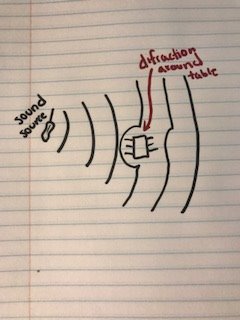
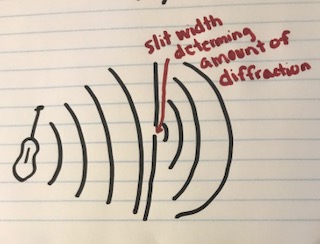
Diffraction, refraction and interference are key parts of sound waves and must be understood in order to learn about sound waves. Go through the blurbs about each key part and if you need to understand a subject more- go find the video!
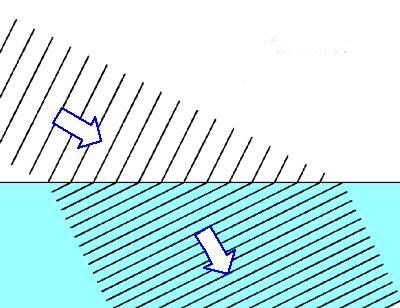
Refraction - Mediums
A medium is a substance that carries a wave (or disturbance) from one location to another - this can be air, water, or any other liquid or solid matter. For the speed of sound, the medium transmitting the sound is usually the air.
This image shows that the sound wave going from air to water which has different property than the air medium causing the wave to diffract. With the formula (v= λf) The speed of the wave as it goes through a different medium depends on the wave's length and frequency which will determine it's amount of refraction
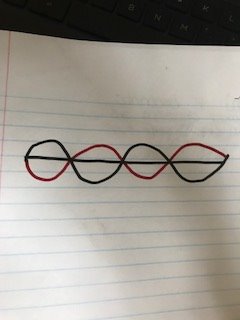
Standing Waves
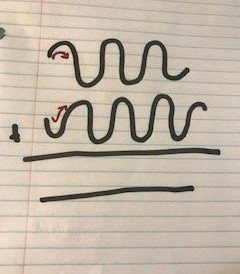
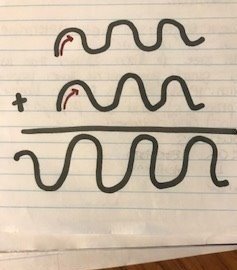
Standing waves is the combination of two waves moving in opposite directions, each having the same amplitude and frequency. The phenomenon is the result of interference-that is, when waves are superimposed, their energies are either added together or cancelled out.
This shows the beginning set up of a standing wave. The waves are interfering where there are points of no displacement produced at the same positions along the medium. These points along the medium are known as nodes (a point at which the amplitude of vibration in a standing wave system is zero). There are also points along the medium that vibrate back and forth between points of large positive displacement and points of large negative displacement. These points are known as antinodes (the position of maximum displacement in a standing wave system).